Full VMRA-SAT
The VMRA-SAT software tool helps national regulatory authorities evaluate their veterinary medicine regulations’ maturity, identify gaps, and build the evidence base for targeted investment and reform.
What is VMRA-SAT?
The Veterinary Medicines Regulatory Authority Self-Assessment Tool (VMRA-SAT) is a structured, globally applicable diagnostic instrument designed specifically for national authorities responsible for regulating veterinary medicinal products.
Its primary purpose is to help regulators systematically evaluate the performance and maturity of their veterinary medicines regulatory systems through a self-led, evidence-based process.
Unlike general regulatory reviews or external audits, VMRA-SAT is explicitly designed to be country-owned, voluntary and focused on learning rather than judgment.
Request Full Desktop Tool Try Web Version
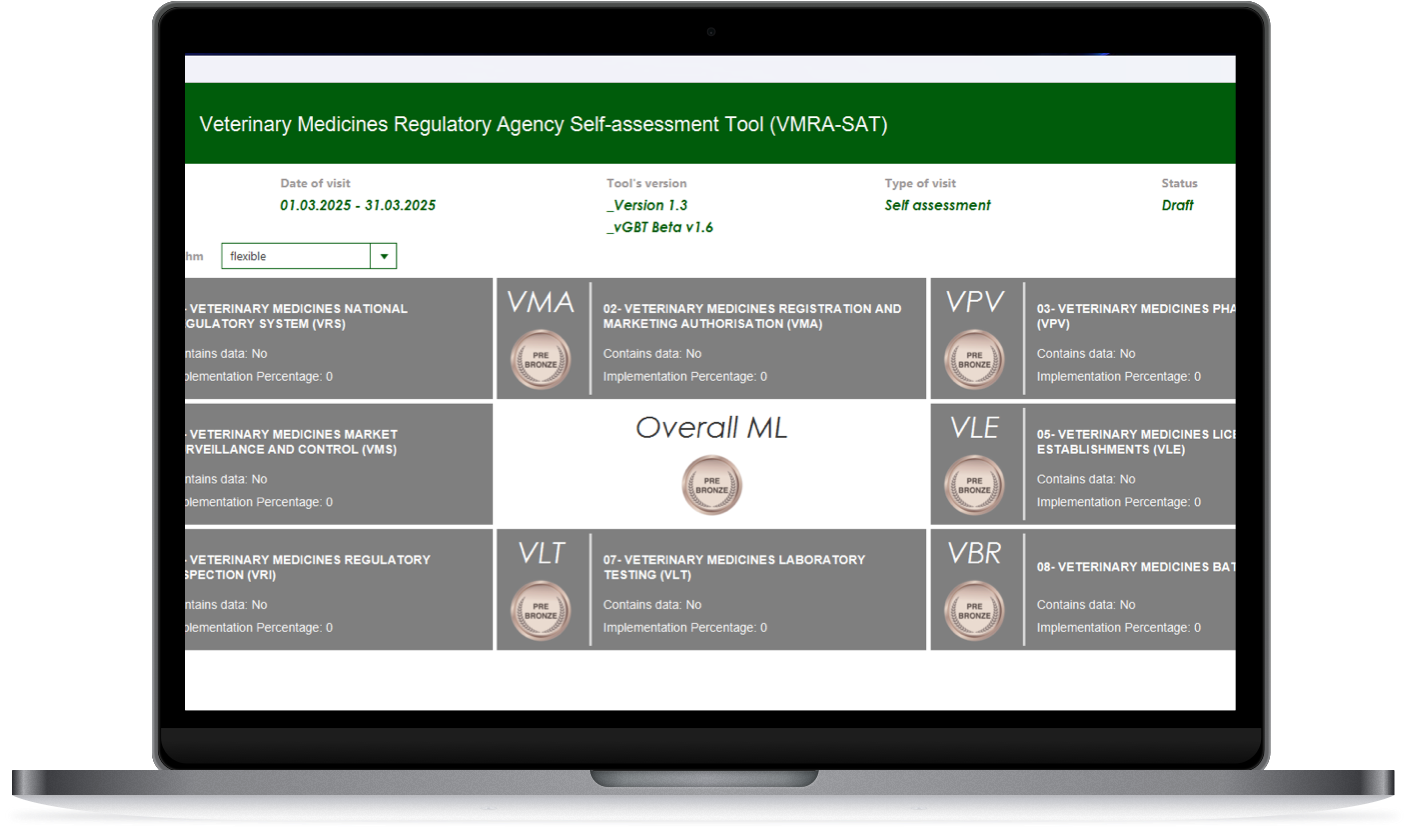
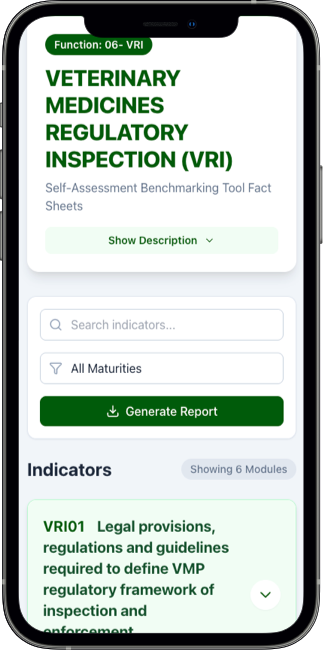
Available In Desktop and Web Versions
The Full VMRA-SAT for Your Desktop
The full VMRA-SAT is available on request, simply fill in the request form and instructions and software will be provided.
The tool is a desktop software that needs to be downloaded and installed. It is currently available in English, French and Spanish, helping to ensure it is accessible to regulators across a wide range of regions and language contexts. Countries interested in getting a copy of the VMRA-SAT software can request it by completing the form below.
Try the Easy to Access Light Web Version
A sample light web version of the full desktop tool, to let you try it.
Inside the Tool
The video animation below shows the VMRA-SAT desktop software, which is the full version of the tool used by regulatory authorities to undertake a structured self-assessment of their veterinary medicines regulatory systems.
How it Works
The tool brings together all core regulatory functions involved in the veterinary medicines lifecycle, including governance and legal foundations, registration and marketing authorisation, manufacturing oversight, distribution controls, pharmacovigilance, inspection, laboratory testing, and enforcement.
By covering these functions within a single framework, VMRA-SAT offers a holistic view of how regulatory systems operate in practice, highlighting interdependencies and areas where weaknesses in one function may undermine others.
VMRA-SAT uses clear sub-indicators and structured guidance to support consistent interpretation across countries and users. This helps regulators move beyond informal or ad hoc self-reflection to a more systematic understanding of regulatory performance. The structured nature of the tool supports internal dialogue, shared understanding among staff, and institutional memory, especially in settings where documentation and processes may be fragmented or unevenly applied.
The VMRA-SAT Stucture
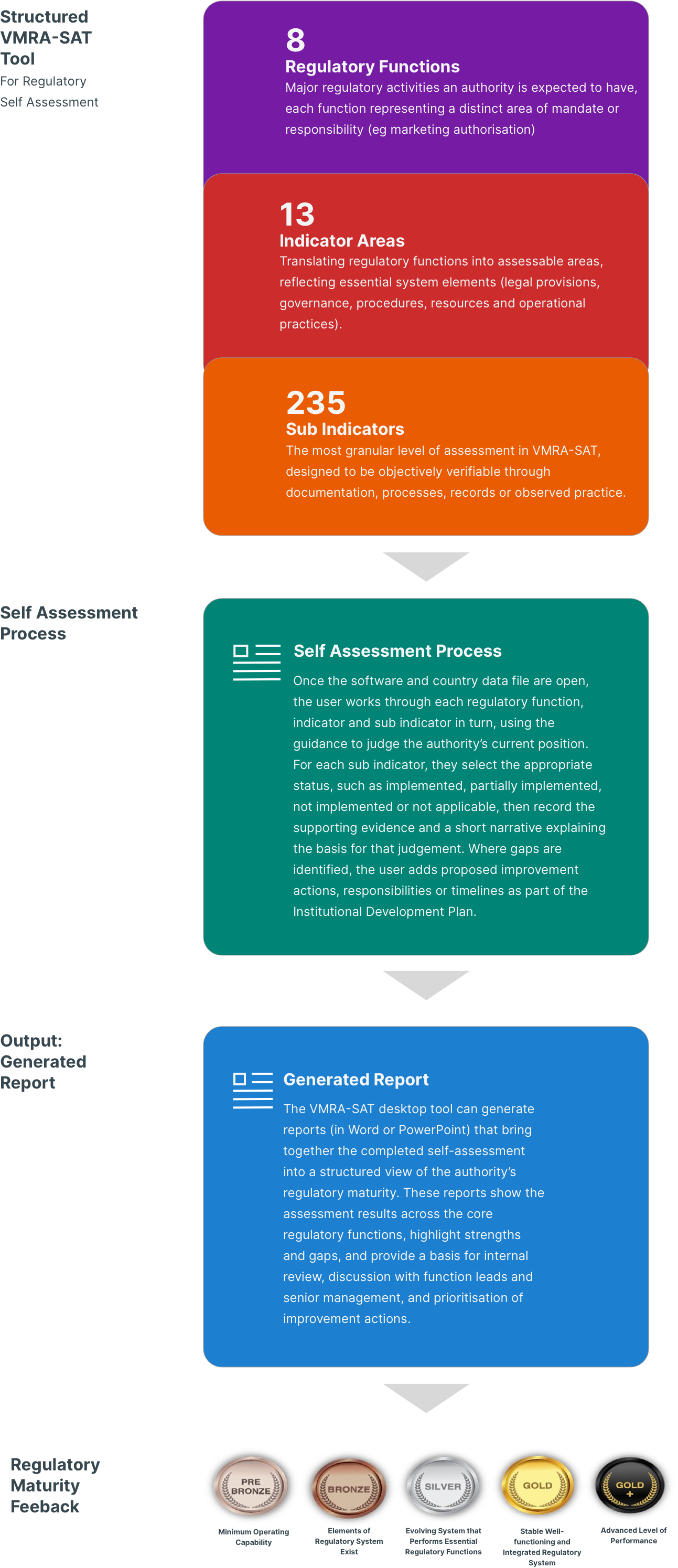
VMRA-SAT uses a clear and structured assessment hierarchy based on functions, indicators and sub indicators.
Functions
Functions represent the core regulatory responsibilities of a veterinary medicines regulatory authority.
Each function is broken down into indicators, which describe the key system elements required for that regulatory responsibility to operate effectively.
Indicators
Indicators are further assessed through sub indicators, which set out specific, evidence-based criteria demonstrating how regulatory activities are implemented in practice.
This structured approach supports consistency, transparency and objective assessment, while helping authorities trace regulatory performance from high level responsibilities through to verifiable operational evidence.
The Tool’s Framework
The 8 Regulatory Functions in the VMRA Tool
Click a card to open the relevant fact sheet in a new tab
Veterinary Medicines National Regulatory System
The overarching framework that underpins all core veterinary medicines regulatory functions.
Veterinary Medicines Registration and Marketing Authorisation
Assessment and authorisation of veterinary medicinal products before they are placed on the market.
Veterinary Medicines Pharmacovigilance
Detection, assessment and prevention of adverse events and other product related problems.
Veterinary Medicines Market Surveillance and Control
Monitoring products on the market and controlling quality, compliance and substandard products.
Veterinary Medicines Licensing Establishments
Licensing manufacturers, distributors, wholesalers, importers and retailers across the supply chain.
Veterinary Medicines Regulatory Inspection
Inspection of establishments and activities to verify compliance with regulatory standards and good practices.
Veterinary Medicines Laboratory Testing
Independent quality control and testing to support regulatory oversight and product assurance.
Veterinary Medicines Batch Release
Independent regulatory batch release, particularly for vaccines and other immunological products.
Tried and Tested Globally
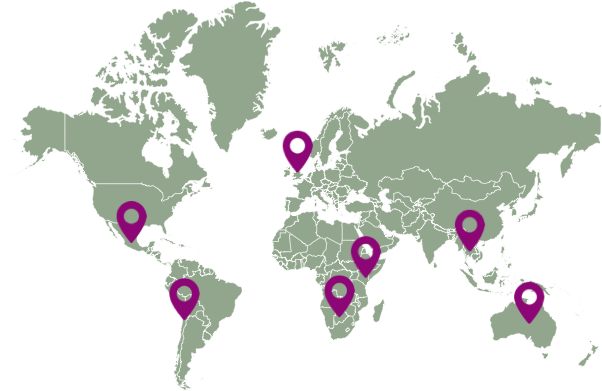
Piloted in 11 Countries Across 4 WOAH regions
Africa: Rwanda, Botswana, Kenya, Tanzania, Uganda, Zambia
Americas: Mexico, Chile
Asia-Pacific: Australia, Thailand
Europe: UK
Request Full Desktop Tool Try Web Version
FAQs
VMRA-SAT is a structured self-assessment and benchmarking tool for veterinary medicines regulatory authorities. It helps authorities review their legal mandate, organisational arrangements, regulatory processes, workforce capacity and transparency in a systematic way.
VMRA-SAT was developed to address the need for a veterinary medicines specific tool that can help countries assess the maturity of their regulatory systems in a clear and consistent way. It is intended to complement existing WOAH support mechanisms and helping fill a recognised gap in the veterinary medicines regulatory space.
The tool helps authorities identify what is already in place, where the main gaps are and what actions may be needed to strengthen the system over time. It provides a structured basis for reflection, priority setting and institutional development planning.
Pilot feedback shows that the tool is valued for helping authorities identify practical improvement actions, support honest self-reflection and provide a clearer basis for planning future development. Feedback also indicates that users see additional value in being able to compare progress and also saw value in opportunities for benchmarking and shared learning in the future.
The tool can support regulatory strengthening by helping authorities make sense of complex systems in a structured way. It can inform institutional development plans, support governance discussions, guide prioritisation and help authorities present a clearer case for reform and investment.
No. The VMRA-SAT is a self-assessment tool. The process is led by the country itself, using its own staff and the results remain entirely with the country. There is no external judgement, ranking, or conditionality attached to the assessment. It is designed as a mirror for regulators - highlighting both strengths and gaps.
Yes. The available evidence suggests that VMRA-SAT is useful not only for reviewing the current situation, but also for shaping future action. Follow up discussions and correspondence show that authorities use the outputs to think about realistic priorities, leadership engagement and institutional development planning.
Yes. A common assessment framework can help support benchmarking, cooperation and regulatory learning across authorities.
Yes. Even where a full exercise may not yet be practical, the tool can still be useful as a reference point or checklist for future system development. However, the new web-based preliminary self-assessment version should be accessible and usable by all as it is intended to be easier to use regardless of stage of development or resources.
The tool assesses eight core functions: national regulatory system governance; registration and marketing authorisation; pharmacovigilance; market surveillance and control; licensing of establishments; regulatory inspection; laboratory testing and batch release of biological products.
Yes. Pilot feedback highlights the importance of involving the right people across relevant functions and having enough internal coordination to gather evidence, review findings and agree priorities. Feedback also points to the value of engaging senior leadership in reviewing the outcomes.
The VMRA-SAT assesses the regulatory functions that are critical to controlling veterinary antimicrobial use: registration and marketing authorisation (are antimicrobials properly evaluated before reaching the market?), pharmacovigilance (are adverse effects and resistance patterns monitored?), market surveillance (are products on the market what they claim to be?) and inspection (are supply chains controlled and prescription requirements enforced?). By strengthening these functions, countries are better equipped to implement their National Action Plans on AMR and meet some of their commitments under the Global Action Plan and the 2024 UN Political Declaration.
The assessment produces a detailed maturity profile across all eight functions, identifying strengths and areas for improvement. Countries are encouraged to use this to develop an institutional development plan (IDP) that prioritises actions, sets timelines and supports resource mobilisation. The tool can be repeated periodically to track progress.
Yes. The VMRA-SAT has been or is being piloted in a number of countries across Africa (Rwanda, Botswana, Kenya, Tanzania, Uganda, Zambia), the Americas (Mexico, Chile), Asia and Pacific (Australia, Thailand, Indonesia), and Europe (United Kingdom). These countries span a wide range of regulatory maturity levels and economic contexts.
Across the pilot evidence, the most common challenges are the time and effort required to complete the exercise, the human resources needed, the burden of gathering and organising evidence and the need for clearer interpretation of some indicators and applying scoring consistently.
This is one of the most consistent concerns raised in the pilot phase. Discussion with pilot countries and survey analysis both show that many users found the exercise demanding, especially when balanced against other responsibilities or when documentation was difficult to assemble. In response to this feedback, a new web based preliminary tool was developed to provide a lighter starting point. Its purpose is to help authorities carry out a similar level assessment, identify gaps and consider readiness before deciding whether to complete the full VMRA SAT exercise.
The evidence suggests that initial training is helpful, but often not enough on its own. Users also value clearer guidance on scoring and evidence, proportionate expectations around documentation, and follow up support after workshops or introductory sessions. In response to that a manual will be produced and an accompanying website with further guidance and training.
Yes. Pilot feedback is being reviewed and used to inform future improvements, including consideration of how the approach can be made more proportionate while keeping its core purpose intact. That is why the web-based preliminary tool, which is simpler to use and navigate, was conceived.
VMRA-SAT can be described as a mirror for regulators, helping them reflect on what is working well, where the gaps are and what progress is needed over time. VMRA SAT supports veterinary medicines regulatory authorities to reflect, plan and strengthen their systems in a structured and practical way.
Countries interested in piloting the VMRA-SAT, undertaking a preliminary web-based assessment or receiving a virtual demonstration can contact the project team at request@vmra-sat.org. There is no cost to participate as a pilot country.
Visit the VMRA-SAT website at www.vmra-sat.org, or contact the project team at feedback@vmra-sat.org.